From Chaos to Conversion: How I Used AI to Turn My DMs Into a 24/7 Sales Engine
I used to dread opening my Direct Messages (DMs). Every time I checked, I’d see dozens, sometimes hundreds of unanswered messages, some with potential leads, many with endless questions, and more than a few lost opportunities. It felt like chaos. My inbox was a mess, and I was leaving money on the table.
Then I flipped the switch. I built a system. I let AI take over, in stages, until my DMs went from disorder to a revenue‑generating machine. Today I’ll walk you through exactly what I did, what I measured, and how you can do the same from a real human’s point of view, not a cold sales pitch.
Why my DM backlog wasn’t about volume, it was about workflow at first, I assumed the problem was simply “too many messages.” But as I dug in, it became clear: the volume was manageable. What was missing was structure. Without a system to triage, qualify, and respond intelligently, leads slipped through the cracks.
If you’re still replying manually, “I’ll get back to you” or “which one” types of answers, you’re not playing with leverage, you’re working like it’s 2018. You need a DM system that:
– Detects intent (Is this about price? shipping? booking? returns?)
– Automatically qualifies or answers basic questions
– Funnels hot leads toward purchase or human handoff
When AI is your backbone, not just a “fast reply bot” your inbox can evolve from a burden into your best salesperson.
My 3‑Step DM Automation Playbook
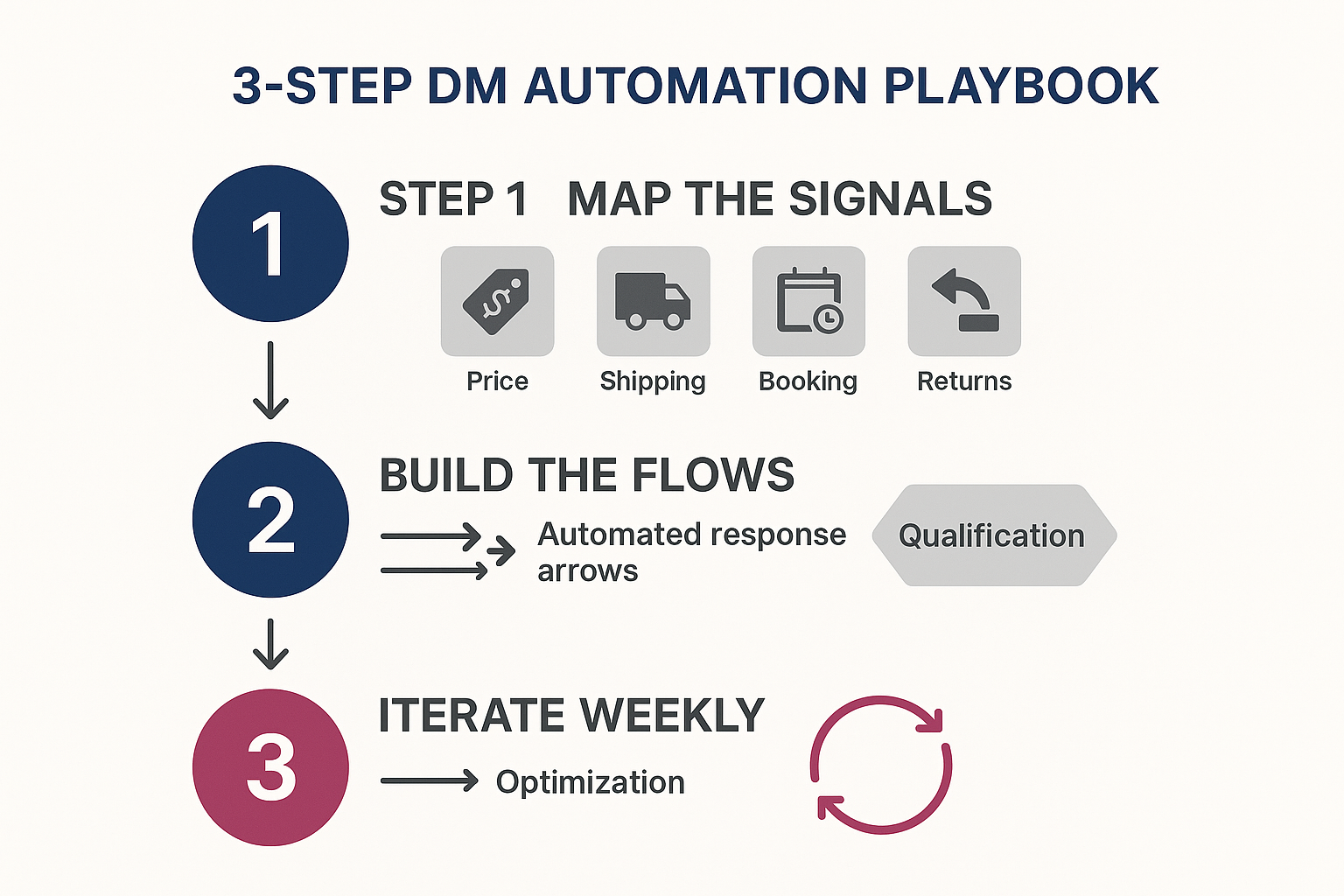
1. Map the signals
I started by listing the 10 most common intents people message me about: price, shipping, booking, stock, returns, invoice, FAQs, collaboration, discounts, complaints.
Whenever a DM came in, the system would map it to one of these intents (or flag it as “unrecognized / human needed”).
2. Build the flows
For each intent, I built a flow like:
- Answer → a relevant automated response (e.g. “Yes, this product is $X”)
- Qualify → ask a qualifying question if needed (“Which size are you looking for?”)
- Capture data → collect email, phone, or extra info
- Offer next step → e.g. link to checkout / booking / handoff to human.
For example: someone asks “What’s the price?” → I immediately reply with the price, ask which variant they want, and offer a checkout link. If they ask a more complicated question, the system routes them to a human.
3. Iterate weekly
No system is perfect at launch. Every week, I:
- Review chat transcripts
- Spot failed routing or confusing responses
- Add missing quick replies
- Fine‑tune thresholds for human takeover
This iterative approach ensures things don’t break or stagnate.
What I Actually Measured (So You Know It’s Working)
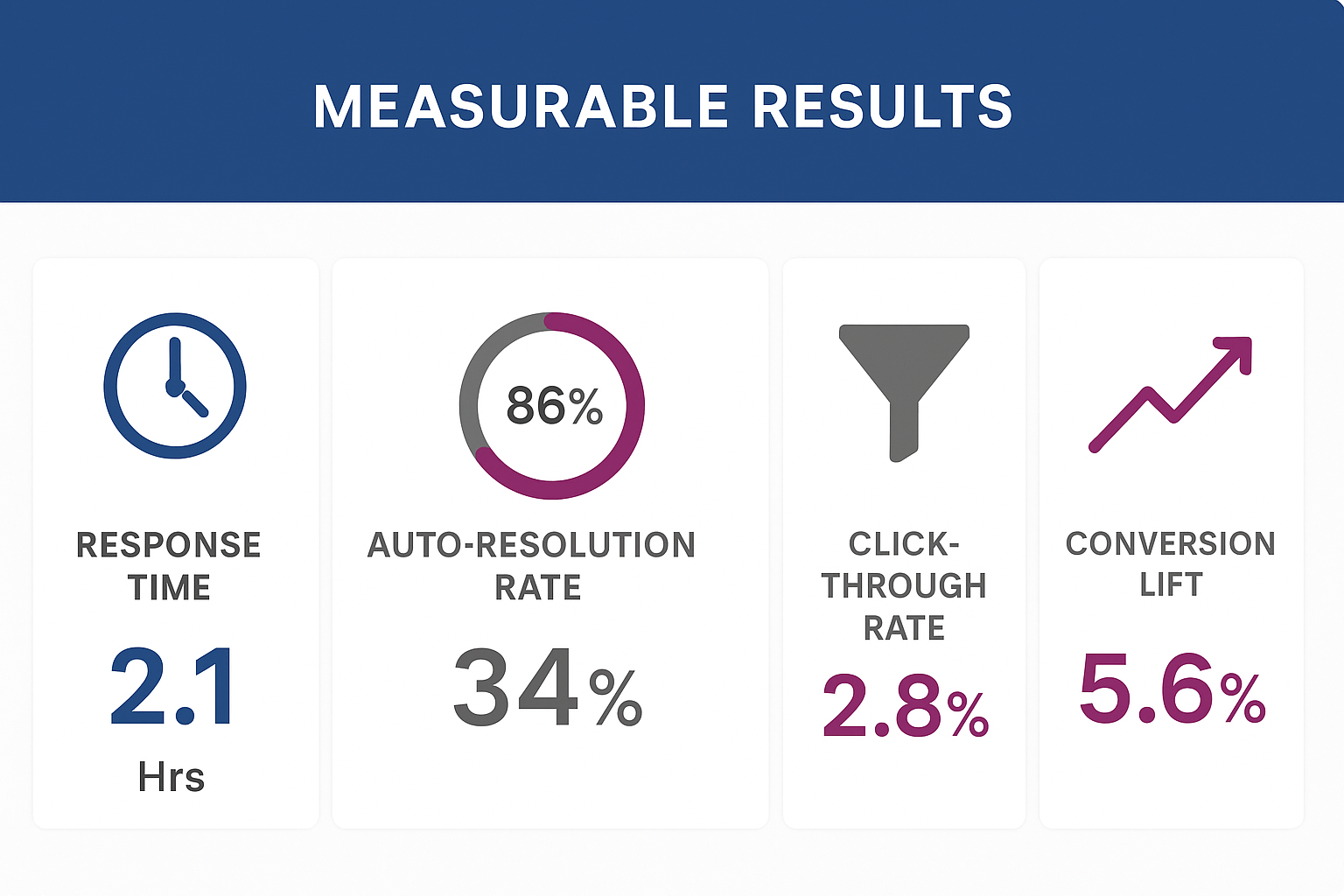
To know my system was effective, I tracked several before vs. after metrics. Here are the fundamentals:
1. Median first‑response time — I aimed for seconds, not minutes
2. Percentage of DMs auto‑resolved — no human needed
3. Lead capture rate — how many DMs gave me email/phone
4. Click‑through rate to checkout / booking
5. Conversion lift from DM‑sourced chats
When I measured, the changes were dramatic. My “first response” dropped from many minutes (or hours) to just a few seconds. A large share of questions were resolved without me ever lifting a finger. More people moved themselves toward purchase, often straight from chat.
Why This Isn’t Just “Another Chatbot” Fix
You might think: “Why not just plug in a chatbot or script?” The difference is learning, adaptability, and sales intelligence.
– Basic bots tend to be static, they answer FAQs but don’t evolve
– AI DM systems can learn your voice, your product, your patterns
– Over time, the system can better detect when a message is likely a sale vs. a question
In my setup, the AI grew smarter: fewer misroutes, more accuracy, and more direct conversions.
How I Started (And How You Can Too)
If you want to try this yourself, here’s how you begin:
1. Pick one intent to start (I began with “pricing”)
2. Build a minimal flow for it, answer, qualify, direct to next step
3. Deploy it, monitor, and fix mistakes
4. Add more intents gradually (shipping, booking, returns)
5. Each week, optimize and tune
Don’t try to build the perfect AI overnight. Get one workflow working, prove results, then expand.
What I Learned Along the Way (Lessons From the Trenches)
– Start small — Too many flows at once = messy
– Humans are still necessary — Let AI handle 80%, humans take the rest
– Measure rigorously — If you can’t measure, you can’t improve
– Be ready to adapt — What works for product A might not for B
– Don’t overpromise — AI helps, it doesn’t replace empathy
Final Thoughts
Writing this, I realize something important: this system doesn’t just scale my business, it scales me. It lets me stay lean, responsive, and available, without burning out.
You don’t need a big team or massive budget. You just need structure, iteration, and the right tools. If you build your DM pipeline as a true sales machine, you turn chaos into clarity and your inbox becomes one of your most powerful sales channels.
- Your Next Step
Let's Build Your Advantage
If you are ready to move beyond discussion and start implementing intelligent solutions that deliver a measurable impact, let's talk. I am selective about the projects I take on, focusing on partnerships where I can create significant, lasting value.
FAQs
The concept is to use AI automation to handle direct messages, detecting user intent, replying instantly, qualifying leads, and driving sales, so your inbox works like a round-the-clock salesperson, not just a message center.
Unlike basic chatbots that give static answers, an AI-driven DM system learns your brand voice, adapts to new queries, and improves over time, helping it detect buying signals and close sales more effectively.
Start small: choose one intent (like pricing or shipping), design a simple flow to answer, qualify, and redirect users, then test, monitor, and improve before adding more flows.
You can expect faster response times, more auto-resolved messages, higher lead capture rates, and improved sales conversions from chat-based interactions.
No, humans still play a vital role. AI handles routine queries and leads, while humans step in for complex questions or emotional conversations, ensuring empathy and trust stay intact.